Wednesday, October 26, 2011

Back Story: Second Acts

I was getting ready to taste some Lagreins from Alto Adige a couple of days ago with my friend Anthony Vietri, winemaker/owner of Va La Vineyards in Pennsylvania, when he whipped out an almost-yellow newspaper clipping and started talking about how this writer was going on about Zinfandels from Amador County in California. He handed it over to me to take a look.

It was dated Nov. 4, 1979, and was from the Wilmington NewsJournal. It was headlined "California Zinfandels with zing." The byline was by Roger Morris. "My grandmother had saved a recipe from that page," Tony said, "and it fell out of a book she had. She said, 'That's Roger!'"

Despite what Fitzgerald wrote about there being no second acts in American life, I'm having one.

Back in 1978, I started writing a weekly wine column for The Washington Star because I had worked before for the editor, she liked my writing, and she needed a wine columnist. As wine was my passion de jour, I volunteered to write it. An editor for the NewsJournal saw one of the columns in the Star's Sunday magazine and said he could just re-run the Star column three weeks a month if I would write something local one week a month. Although at the time there were no area wineries, I did not let that deter a perfectly good opportunity.

Unfortunately, the Star was an evening newspaper six days a week, and evening newspapers were even then an endangered species as network news was eating their dinners. When the Star folded in the early '80s, I was without an outlet in the days when there were no blogs. But I was able to transfer allegiance to a weird new national newspaper called USA Today and became their first wine columnist. Alas, we had a friendly parting of the ways a year later because their Wednesday sections were often cut to 4 pages, and my column was on the other four pages.

Although I had a healthy day job throughout all this, I soon realized I wanted to get back into wine writing. But it was not until 1998 - more than 25 years later - that I again began writing a weekly column for the NewsJournal. Then came an opportunity to also write for Colman Andrews at Saveur magazine. Year by year since then, I've added print and online magazines for which I write chiefly about wine, food and travel.

Today, my byline appears in more than 15 publications, including international print outlets such Wine Enthusiast, Robb Report, Beverage Media, Drinks Business, Town & Country, Sommelier Journal, Intermezzo and - yes - USA Today magazines. Then there are online publications such as iSante, Sommelier Journal and The Daily Meal (again with Colman) and a handful of regional magazines, although I no longer write for the NewsJournal.

It's been a good Second Act. I hope there is no necessity for a third one.

Until next time...


Roger Morris

Sunday, October 23, 2011

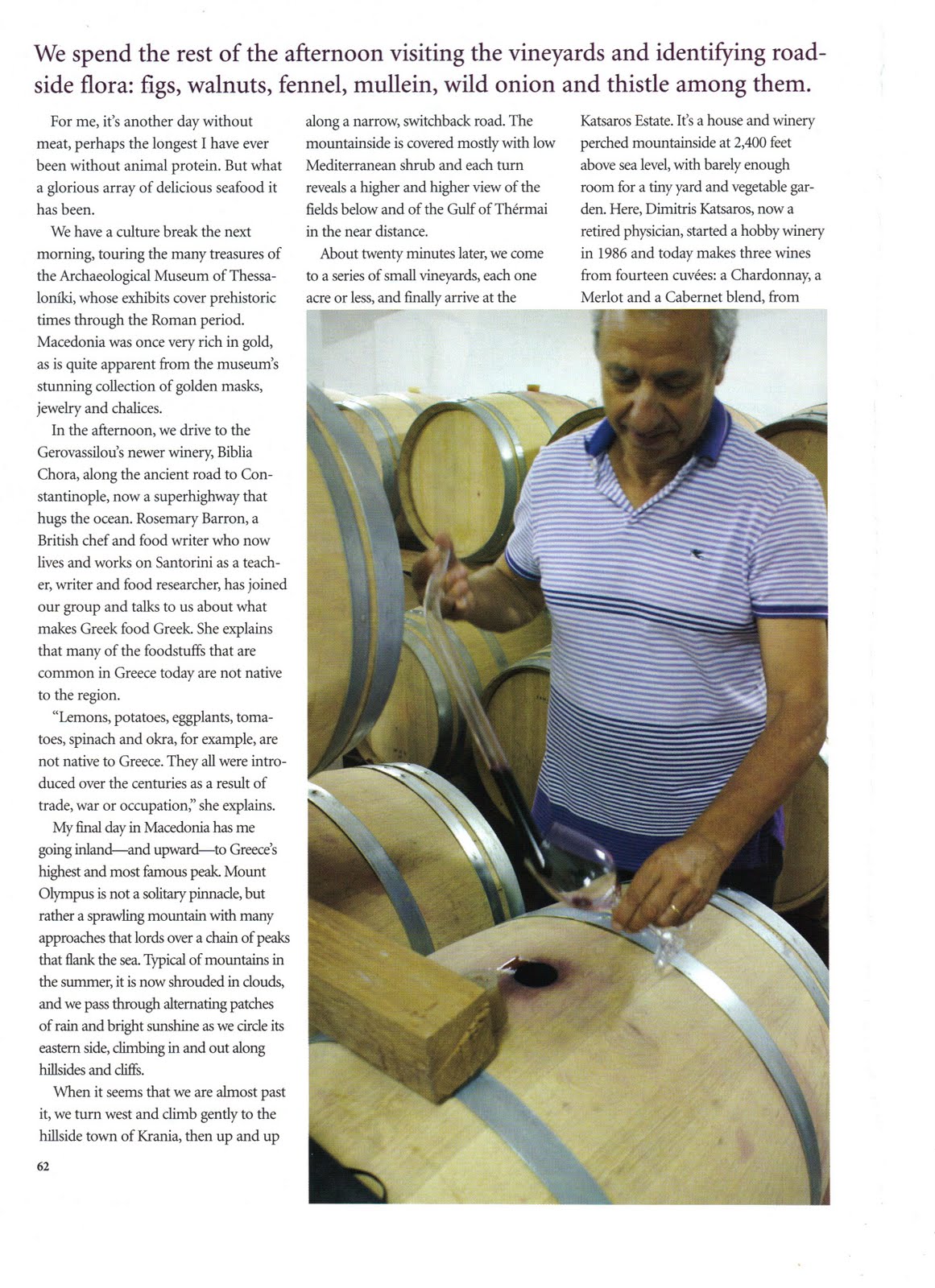
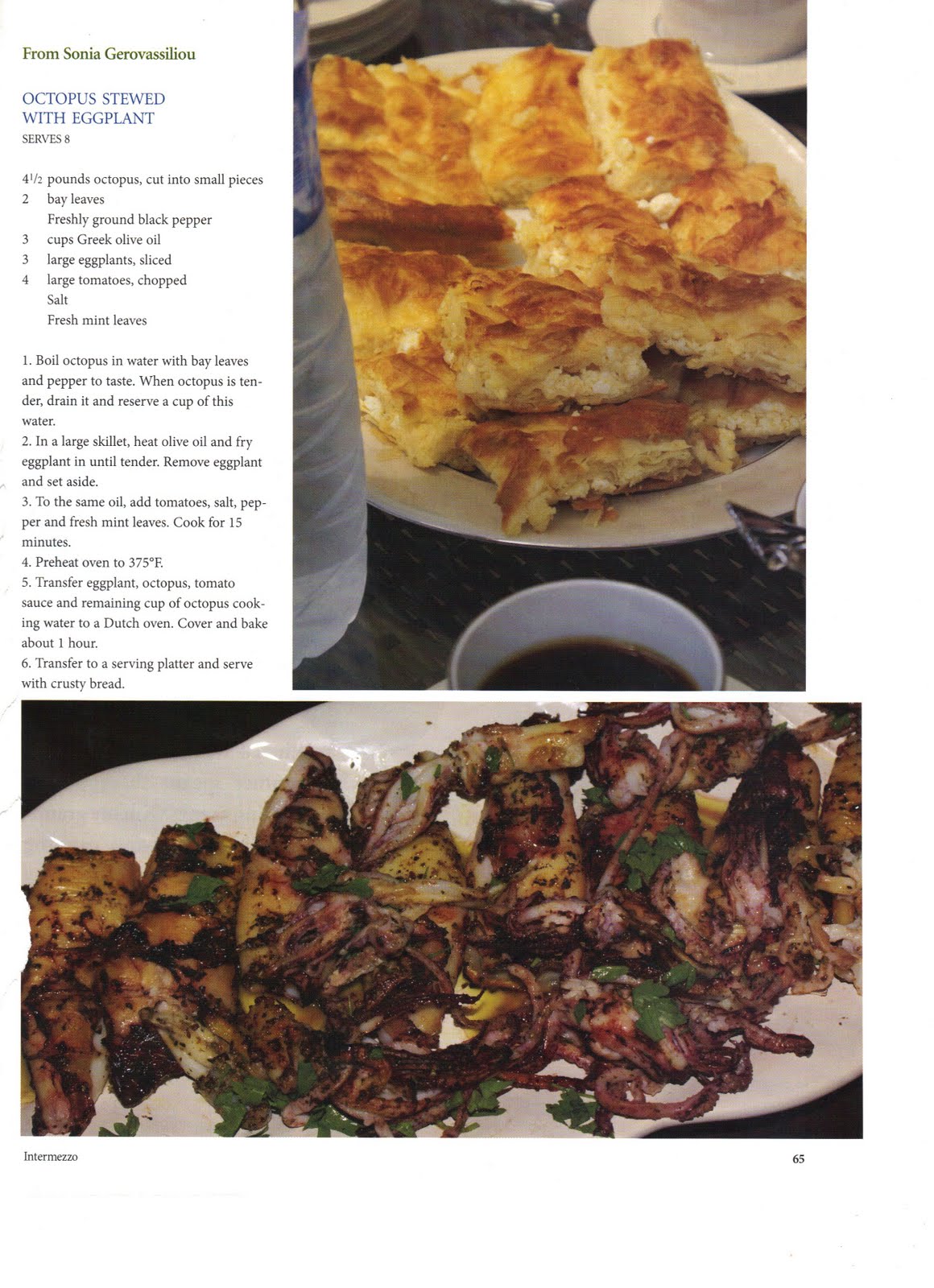
Wines & Foods of Greece's Macedonia

In the new issue of Intermezzo, I report on the food and wine, mountains and seasides, people and culture of the north of Greece.


Thursday, September 8, 2011

Back Story: Cotes du Bordeaux

Age and experience may not give you wisdom, but they do give you a bookshelf full of trip journals. Some time ago, I started using a separate journal for each reporting sojourn I've gone on, which means that dozens of them now line the back bar opposite my desk. Each one is a collection of facts, interviews, observations, contact info and tasting notes. Although most of this information is related to assignments I have before getting on the airplane, many of the articles that they later generated resulted from pitches I made after returning. My favorite part of the flight home is sipping a handful of Jack Damiels on the rocks while evaluating new article ideas that had come up during the trip and which editors might want them.

So any time I have a new assignment - even if it entails a new reporting trip - I'm always combing through the old journals to see what information is relevant to the new assignment. Of course, I just use this material as a starting point before I start making new calls and firing off new e-mails, but the notebooks provide me a perspective which, I hope, gives the new article some depth, insight and richness. Thus was the case with the Cotes du Bordeaux story below, recently printed in Sommelier Journal. Some of the people I quote were folks I first interviewed a dozen or so years ago. Not that there weren't last-minutes back and forths with sources in Bordeaux for updates and fact checks.

In the past couple of weeks, I've received assignments for articles on Beaujolais (two), France's South West, Toro, New Zealand, Gimblet Gravels and parts of Australia. A couple are mainly travel. Most are mainly wine-related.

It's time to hit the notebooks again.

Until next time...


Roger Morris

Friday, September 2, 2011

Cotes de Bordeaux Heads New Pubs

The last week of Summer before Labor Day has been a good one for harvesting publications:

1. A colorful piece on the new Cotes de Bordeaux appellation for Sommelier Journal (see below).

2. A heady drink of Xtabentun for the Daily Meal at www.thedailymeal.com/xtabent-n-marks-spot.

3. Running the tab at regional breweries in Delaware Today.

4. Putting the Brandywine wineries under the microscope for Sommelier News (http://www.internationalsommelier.com/).

5. A defense of big-*** California wines on my blog at iSante' Magazine (http://www.isantemagazine.com/).


Until the next time....


Roger Morris


Thursday, August 4, 2011

Serving Up Wine by the Glass

Beverage Media is the official beverage journal in more than 30 states (including New York), and the editorial material - including the article below on wine-by-the-glass programs - appears in all of them.


Friday, July 1, 2011

Porto as Viewed from the Yeatman

The opening of the luxury hotel, The Yeatman, draws attention to the city that gave its name to one of the world's most-noted wines. Below, a poolside view.


Thursday, June 30, 2011

Life after Red: Going into the White Lights

When I'm tasting accumulated wine samples assembled by chance and for no particular article, I usually taste in ones and twos, keeping good notes so that I will have plenty of ammunition if I'm called upon to write about 10 fantastic barbecue wines or great wine pairings for Arbor Day (what really goes best with oak, not just in it?)

But sometimes I'm faced with a Fedex-borne tsunami of bottles, which happens when wine publicists suddenly wake up one Monday morning and all individually make mental notes to themselves as they brush their teeth - "Today is the day to get out those samples!" And just when I've cleared my entry hall of the first wave of fortified boxes, here comes UPS with the second wave.

So early this week, I woke up and suddenly proclaimed as I brushed my teeth, "Today is the day to taste all those summer white samples." In fairness, I waited until my teeth were properly dirty again and absent any taint of the dreaded "minty mouth" before I started tasting, around 11. I get up at 4, so seven hours without wine is a long time.

I combined for the tasting (1) Pinot Grigios from northeast Italy, (2) Assyrtikos from Santorini, (3) Rieslings from Germany and (4) three Pacific Rim Rieslings from the Columbia Valley. Overall, the wines were all reasonably well-made, none were fantastic and a few stood out in a positive manner.

My favorite among the PGs was the 2009 Bollin Trentino, which I found to be juicy and rich, a touch bready as PGs from that area tend to be, but with more zesty and minerally than the others. Fruit flavors? Most of the Grigios had a pleasant but not snappy flavor of plum pulp.

On to the Assyrtikos. Assyrtiko is one of the most popular white grapes in Greece, and much that we drink in the U.S, comes from the isle of Santorini, although a crisper version from northern Macedonia is coming into its own. The two that appealed to me most were the 2009 Argyros, which iss big, juicy, fruity, well-balanced with good acidity and just begging to be taken to the table, and the 2010 Sigalas, which is juicy, spritzy, with a slight Sauvignon-like vegetal note. Neither was particularly complex, but both are good drinking for now.

The Rieslings - 10 of them - are all from P.J. Valkenberg, known especially for its value wines. I did find the very dry, very basic ones left something to be desired, but I've always felt that trockens faced an uphill battle against the contradictions of Riesling being at once demure and opulent. But there were five Rieslings that I though particularly stood out.

Although my wife, who did a walk-by sipping of my top 5, disagrees on this one, I was most taken by the 2009 Baron zu Knyphausen Erbacher Michelmark Rheingau Riesling Erste Lage. [Where are those damned diacritical marks in this program?] It has a lovely, clean nose that doesn't foreshadow the complexity that lay beneath, which is marked by brulee and apricot essence. There is excellent firmness, great minerality and light tannins. It is the kind of drink that shows its presence without being aggressive.

The 2009 Johannishof "Charta" Rheingau Riseling has nice stone fruit flavors with tastes of pear and apricot skins, is slightly juicy, well-balnaced and long on the palate. The 2010 Reichsgraf von Kesselstatt Piesporter Goldtropfchen Piesporter Riesling is rich and rounded with good balance, stone-fruit nectars with good minerality and light tannins. The light-alcohol (9.5%) 2010 Schloss Saarstein Riesling Kabinett reminds me of an apricot cider - juicy, tangy fruit skins, good minerality. Finally, the 2010 Graff Graacher Himmelreich Mosel Riesling Spatlese (8%) is very focused, high on the palate and having a combo of tart apples and light apricot flavors.

As for the Pacific Rim Rieslings are concerned, the brand has always provided the pleasant, basic fruitiness of American Riesling as an attractive price, but they won't take you much beyond that. They make a dry, an off-dry and a sweet.

Until next time,


Roger Morris